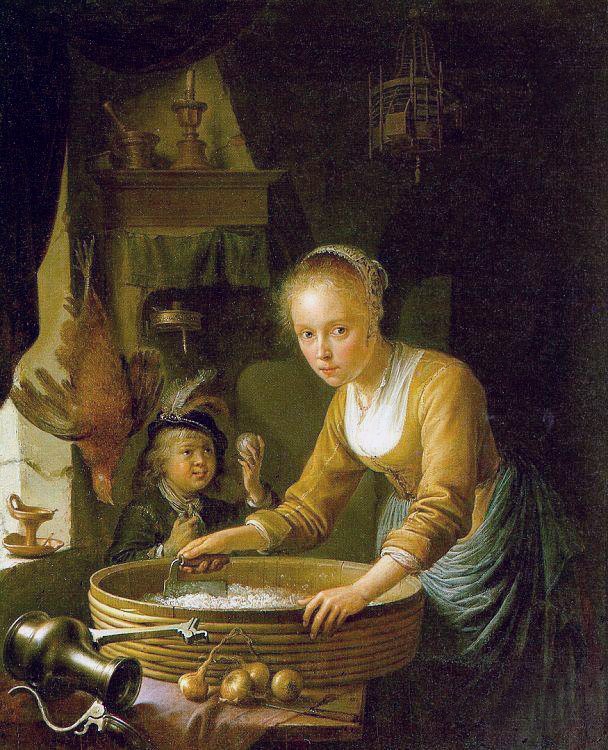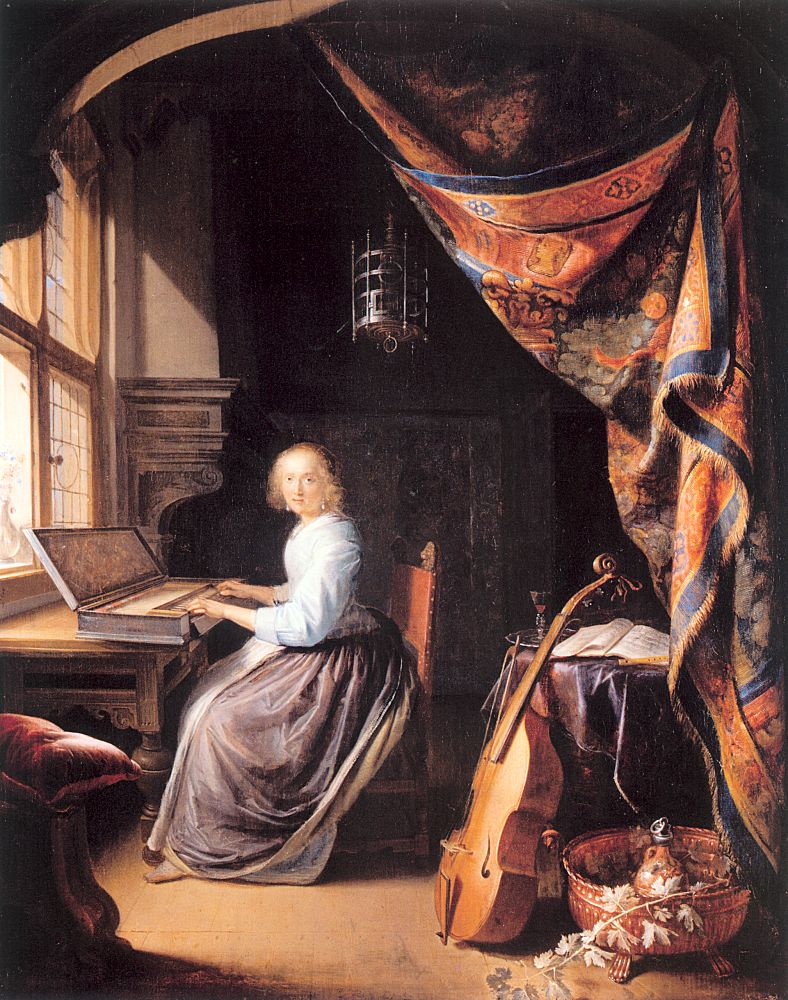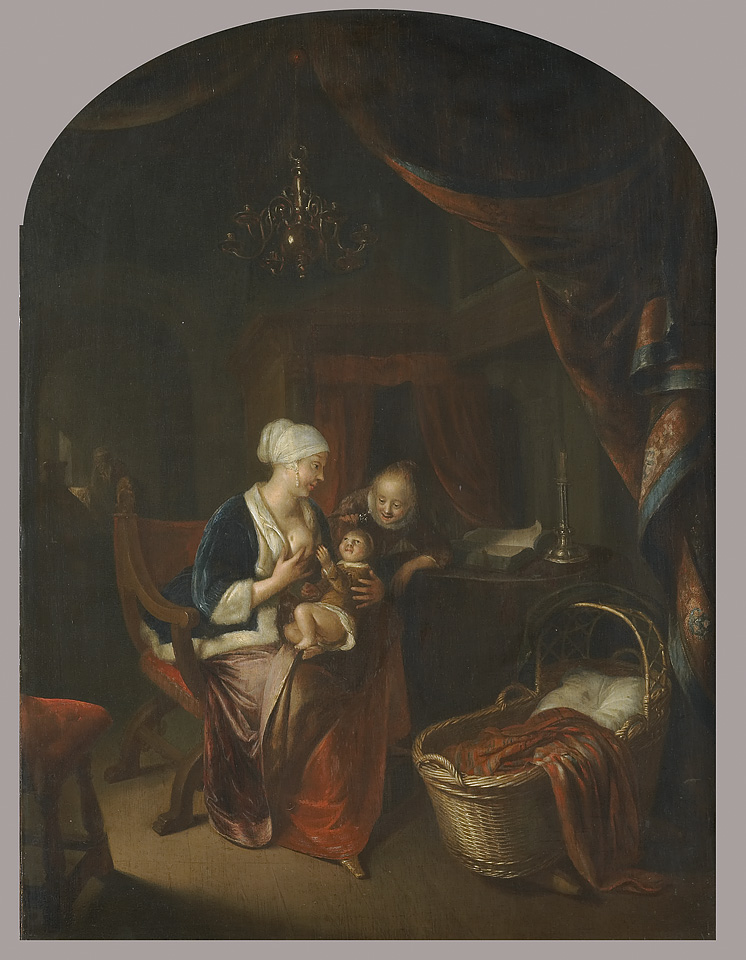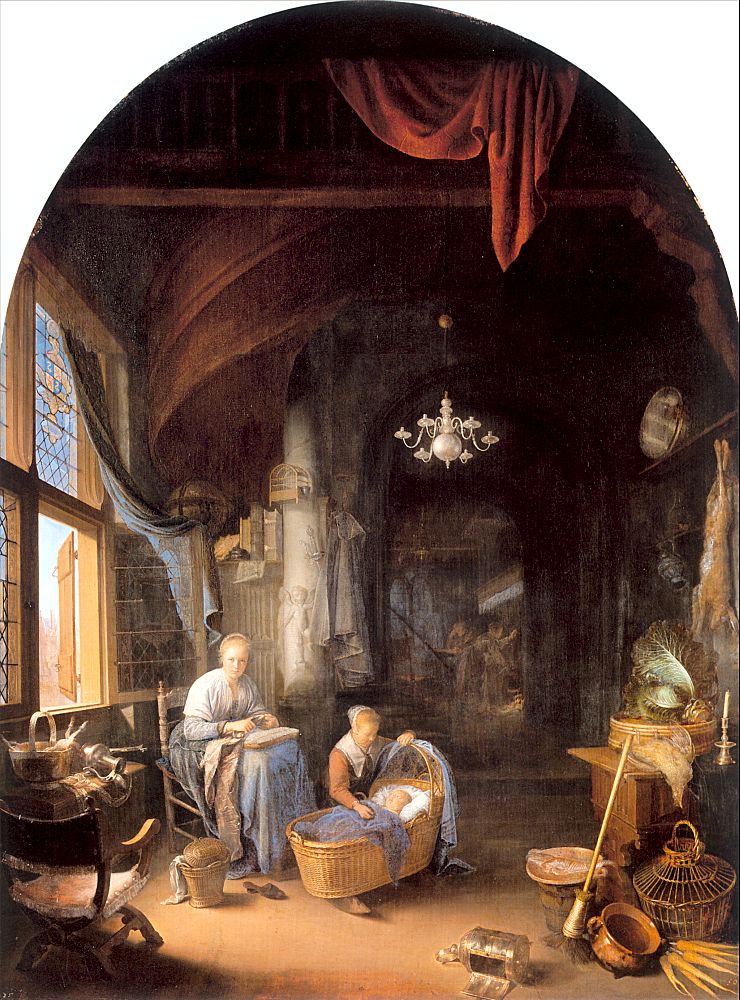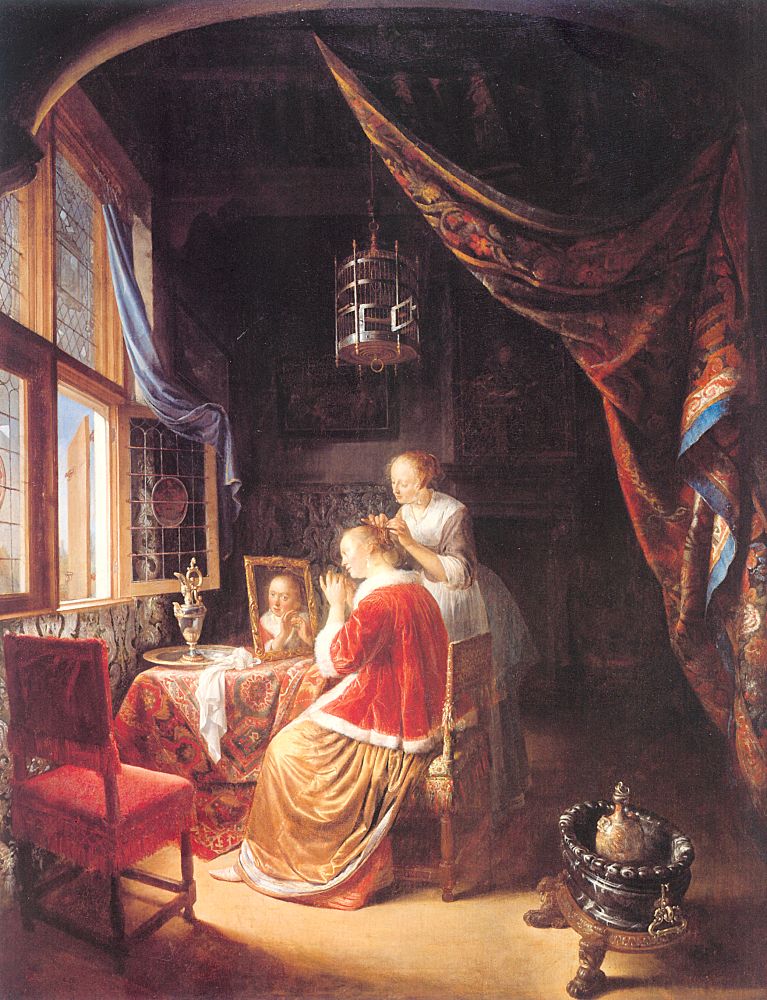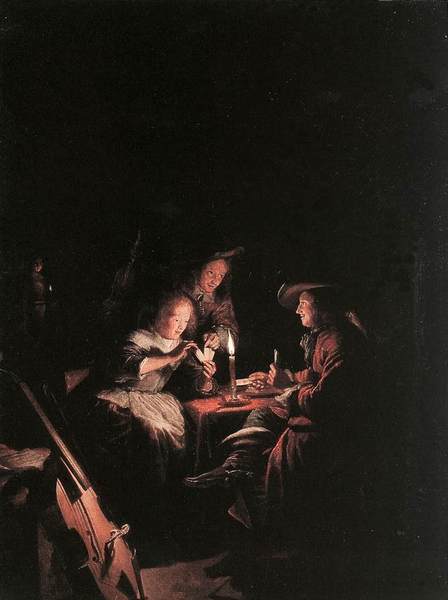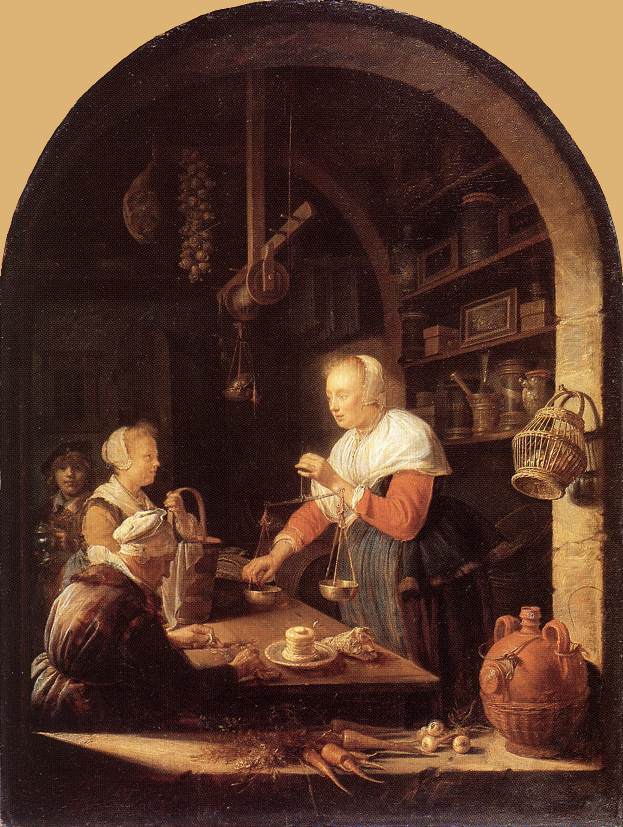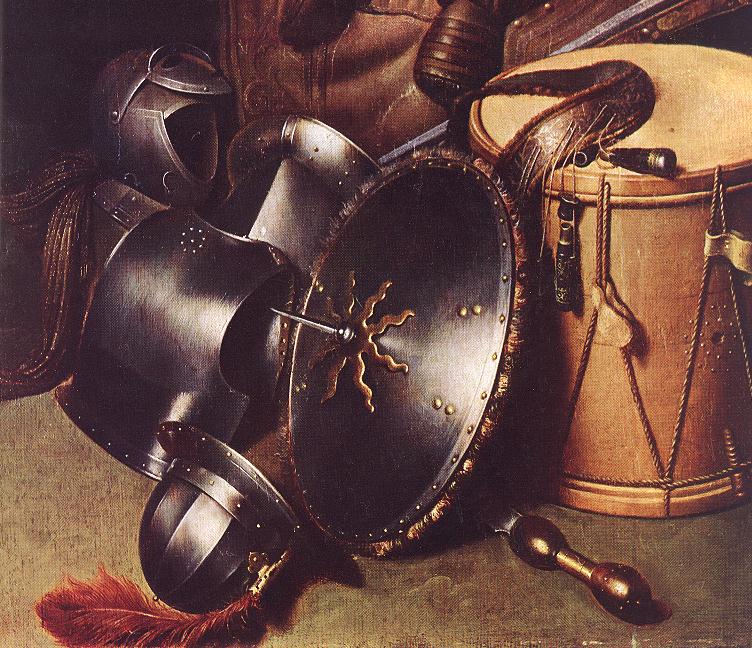
In Gerrit Dou's lifetime the Dutch Republic (1581-1795) was highly urbanised and very prosperous, governed by Calvinist businessmen. Nowhere in Europe labourers and artisans were paid better. The army of merchants grew larger than those of Spain, England, Portugal and France put together. Althought taxes were high and extreme poverty increased, art was much in demand.
Gerrit Dou is now better known for being Rembrand's first pupil, but in his own day the artist was well respected and celebrated, famous across Europe, he prospered, rich and famous to the end. His paintings were paid higher prices than those of his teacher. Dou specialised in small-scale detailed paintings and was an strikingly particular worker. Naturally laborous, Gerrit Dou acquired a fortune the more considerable, as he died at an advanced age (In the 16th century life expectancy was around 30, 50% of children died before they were old enough to be married). The artist's smallest paintings cost as much as a house, and even princes complained as they cashed up. Isack van Ostade barely survived being paid less than four guilders for each of his landscapes, while Dou charged a rate of 6 guilders for an hour's work. Appearently he spent at least a 100 hours' work on a picture.
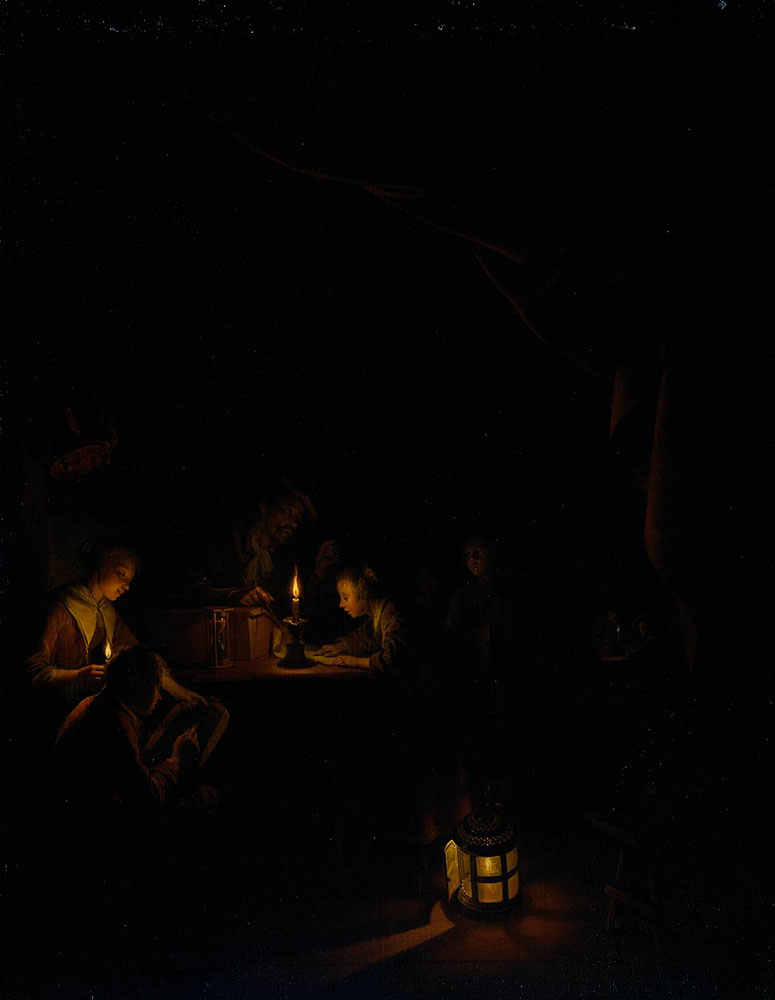
The first solo show on record was arranged for him by an admiring patron, Johan de Bye. In 1665, he rented a room in Leiden to show 27 Dou's works to a paying public. Dou was 52 in 1665 and his candlelight paintings were world-famous.
Gerrit Dou started his career as a glass engraver following his father's trade. Young Dou must have been good as his name is found in the records of the guild of glassmakers in 1625. However, his father sent him to Rembrandt's Studio, located nearby, considering painting financially less stable but physically safer craft than installing and mending glass. Dou had worked as an apprentice for 3 years, he was only 7 years younger than his teacher. Three years of practice under the master were sufficient to establish his name and attract the attention and money of iunfluential men - various foreign monarchs collected work by him.
One of Dou's customers was the Swedish minister Pieter Spiering Silvercron. Their relationship was a form of patronage. Spiering promised Dou a pention of 1000 florin for his right of first refusal. He gave very high prices for Dou's small panels, something between 600 and 1000 fl each. Dou's prestige increased - Spiering bought Dou's paintings for his queen Christina who was attempting to improve the intellectual and artistic evolvement of her court. Queen Christina probably didn't care much for his paintings, as her taste was mostly Italiante and she employed an agent in Amsterdam who sent Italian works. This way Dou's paintings were almost the only Dutch paintings in her collection, except those by her Dutch court painter, David Beck. In a while Queen Christina returned them shortly before her abdication.
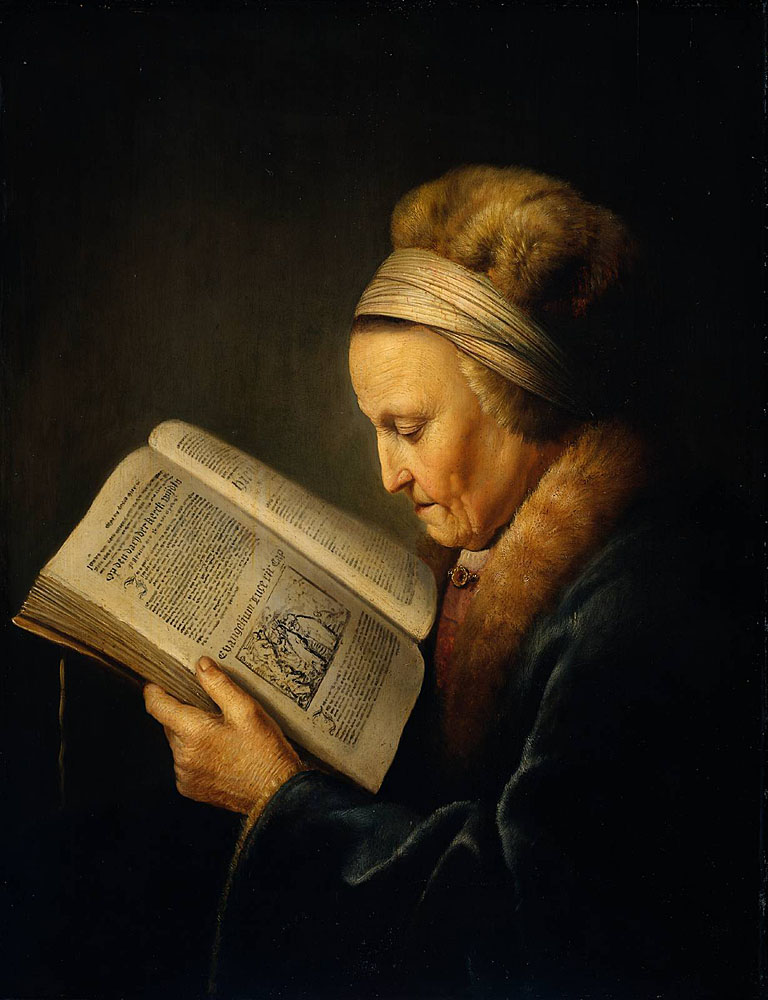
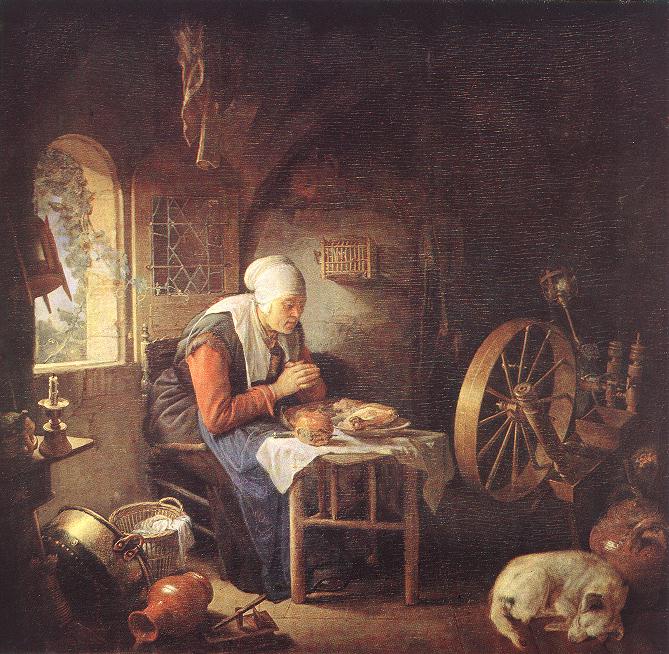
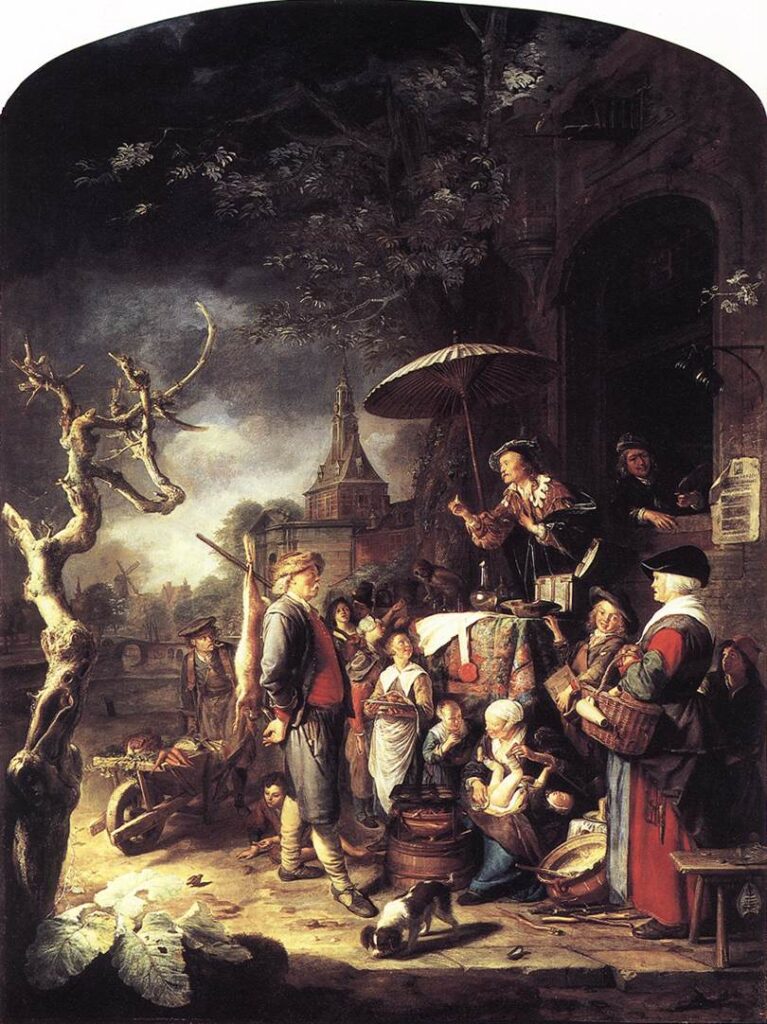
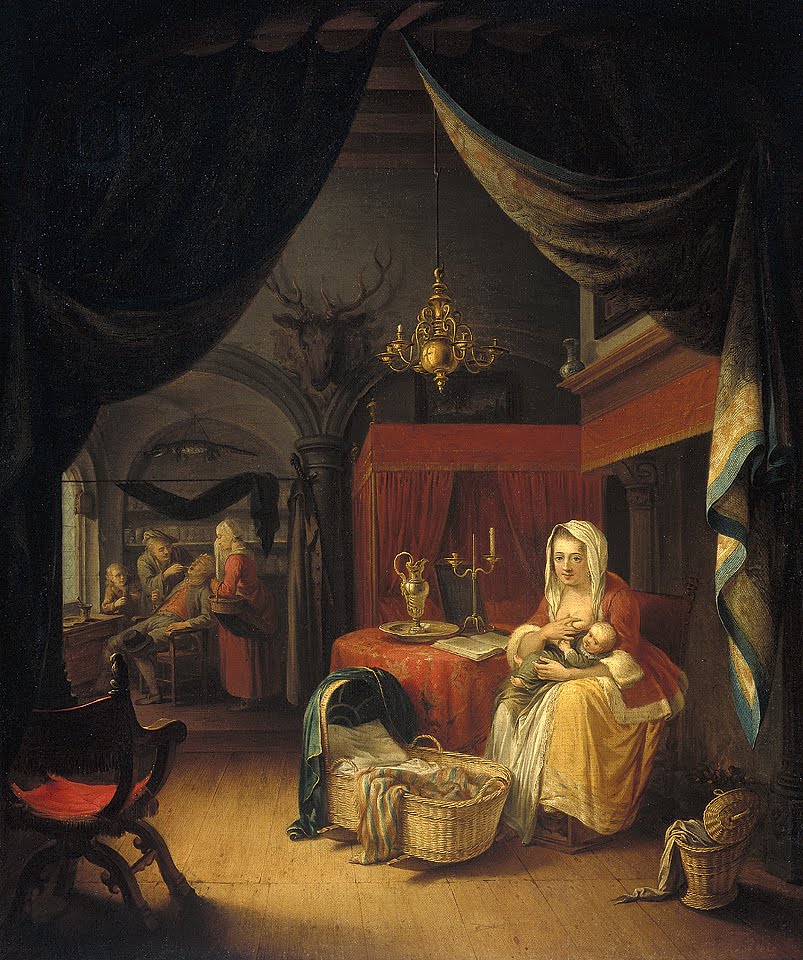
- Dou mainly painted genre scenes and was a slow and careful painter. He was famous for the high finish of his pictures, giving the utmost precision to the accessoires and details, and all his pictures were of very small dimensions.
- It took him 5 days to paint one of the hands only in a small picture of Spiering Family. In another picture he had been painting the broomstick for three days.
- He had a frame with threads corresponding to the squares marked on his board.
It is said he fatigued the patience of his models. Their features became altered by exhaustion and agreeable likeness was lost.
- Dou was known for his obsessive horror of dust. He would keep his canvas, colors and palette in a box closely shut up, to preserve from the slightest dust. He entered his studio softly and sat down with great precaution and waited, allowing the dust to settle. To shelter his easel he used his Chinese parasol.
- Dou made his windows airtight, fearful of the invasion of dust, and lived in a sealed environment totally within his own control.
Dou insisted on painting in full sunlight even when at work on his well-known night-pieces.
- The artist never traveled far from Leiden, in fact he led quite an unadventurous life. He entertained nobility in his now luxurious quarters, such as Cosimo III, Grand Duke of Tuscany, who had at least one of his works in Florence.
Charles II of England praised Dou's pictures and invited him to join the painters at his court. But the artist replied that he could not bear the turmoil of life in a royal palace.
- Gerrit Dou never married. Marriage would have been too extraneous for his lifestyle. The daughter of his half-sister kept house for the artist who preferred his familiar environment.
- Getting older, the artist embeded into his paintings costly objects he was able to afford now. He loved objects and composed interior scenes and still lifes with fine vessels and exquisite instruments.
- Gerrit Dou had remarkable students such as Frans van Mieris, Scalken, Slingelandt, and Charles de Moor.
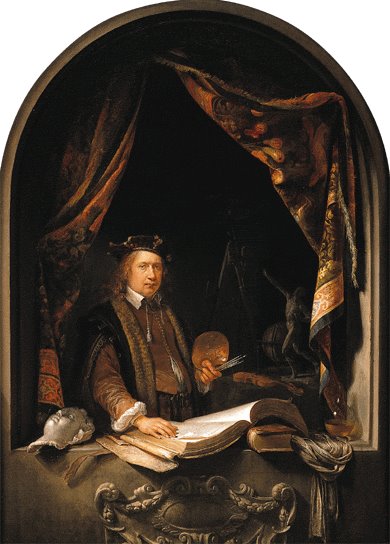
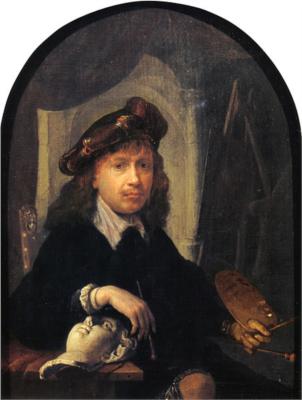
- Imitating his teacher Rembrandt, Dou painted self-portraits all his life, whom he physically closely resembled, judging from the self-portraits.
- Sometime in the 19th century the demand for his work decreased, the critics condemned the artist to be no more than an over-industrious technician.
- In the 1920-30s the Alte Pinakothek at Munich sold off a number of Dou's works. One imagines how ardently those curators' successors at Munich would now wish to have those pictures back -- the artist produced something over 100 works at all.


LOVE THEM! I particularly enjoy the self portrait with the curtain pulled back. That allows the view to look in on a perfectly normal domestic scene, without disturbing the resident(s) a la Frans van Mieris or at times, Vermeer. The Grocer's Shop doesn't have a curtain, but it is equally gorgeous in its glimpse into everyday life.
ReplyDelete